What is laser dentistry?
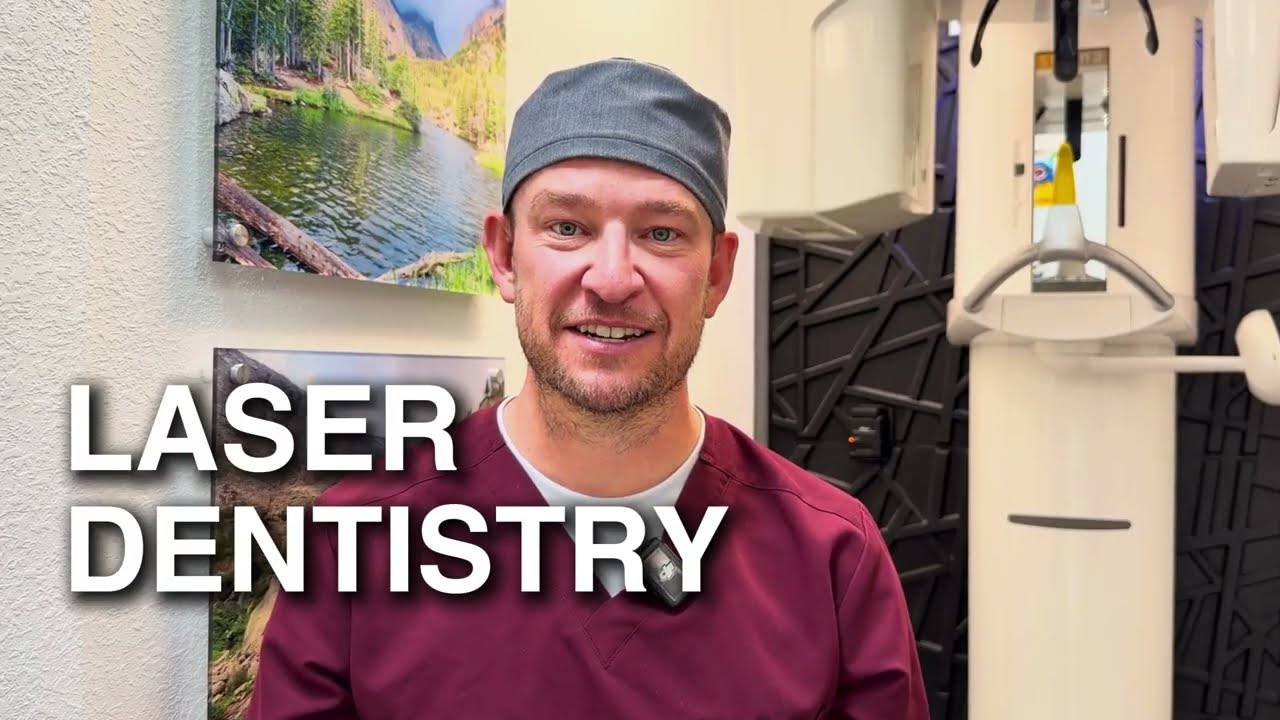
Laser dentistry is a tool that's used in modern dentistry, and it uses light energy to treat certain tooth and gum conditions.
How can laser treatment help with gum disease?
Laser treatment can be used as part of gum disease treatment to target certain bacteria and affected soft tissue around the teeth. Depending on the patient's periodontal condition and the type of laser being used, it may be incorporated alongside other periodontal treatments to help create an environment for the gum tissue to heal.
What is the difference between laser gum treatment and traditional deep cleaning?
The big difference between laser gum treatment and traditional deep cleaning is the method of action. With a traditional deep cleaning, or scaling and root planing, we're using mechanical and ultrasonic instruments to remove plaque and tartar from the tooth and root surfaces underneath the gums.
With laser therapy, we're using light energy to target certain bacteria and affected soft tissue. Laser treatment may be used as an adjunct to scaling and root planing rather than replacing the mechanical removal of plaque and tartar.
What are the pros and cons of laser therapy for gum disease?
There are potential benefits and limitations to doing laser therapy for gum disease. One potential benefit is that the laser can be used to treat soft tissue in a targeted way as part of periodontal therapy. Depending on the procedure and patient, the recovery experience can also vary.
The limitation is that we can't just use the laser for everything. Plaque, tartar, and other deposits on the root surfaces still need to be removed with traditional scaling. Really, the laser is an adjunct. What we do at our office is, if somebody needs a deep cleaning and laser therapy is appropriate, we may pair the treatments. We scale to remove the deposits and then use the laser as an additional part of the periodontal treatment.
Can lasers be used for cavity fillings?
Certain dental lasers can also be used to prepare teeth for fillings. Different laser wavelengths interact with different types of tissue, and some can be used to remove portions of decayed or damaged tooth structure.
Depending on the tooth, the depth and location of the cavity, and the individual patient's sensitivity, some procedures may be completed with little or no local anesthetic. Other patients and procedures will still require numbing to keep the area comfortable.
Can lasers be used for soft tissue modification?
Another procedure we can do with the laser is soft-tissue modification. If somebody has excess gum tissue, such as with certain gummy smiles or gum tissue that needs reshaping after orthodontic treatment, a dental laser may be used to carefully remove or contour that tissue.
Depending on the procedure, lasers can also help control bleeding while we're working. The amount of discomfort and healing afterward varies based on how much tissue is treated and the individual patient.
What happens during laser-assisted periodontal treatment?
Laser treatment can be used as an adjunct or pairing with traditional periodontal cleaning. First, we may numb the area to help keep you comfortable. When we're working underneath the gums and cleaning the root surfaces, many patients still need traditional local anesthetic.
Once the area is numb, we're going to mechanically and ultrasonically remove the plaque and tartar from the root surfaces and clean the periodontal pockets. Once we're happy with what that area looks like, we can follow with the laser when appropriate to treat the soft tissue as an additional part of the periodontal procedure.
What are the benefits of using lasers in dentistry?
There are several potential benefits to using lasers for certain dental procedures. Depending on the type of laser, we may be able to target specific hard or soft tissues and remove only the tissue that needs to be treated.
When we're preparing a tooth for a filling, certain lasers can be used instead of or alongside a traditional dental handpiece. For soft-tissue procedures, lasers can also provide another way to precisely contour or remove tissue. The specific benefits depend on the procedure, the laser being used, and the individual patient.
Who is a candidate for laser dentistry?
Laser dentistry can be an option for many patients, and I find that I'm using a laser for a lot of procedures in this practice. But whether it's appropriate depends on the procedure we're doing, the condition being treated, and the individual patient.
One thing we consider is whether you need local anesthetic. We have patients who are able to get certain fillings done with little or no numbing, while other patients with more sensitive teeth may need traditional anesthetic to make the procedure more comfortable. We evaluate that based on your needs and the treatment we're providing.
You're never alone in caring for your dental health. At Boulder Canyon Dental, our team is here to support and meet you where you are in your dental journey. Call (970) 514-0662 or email [email protected] to connect with us today.
What is Solea?
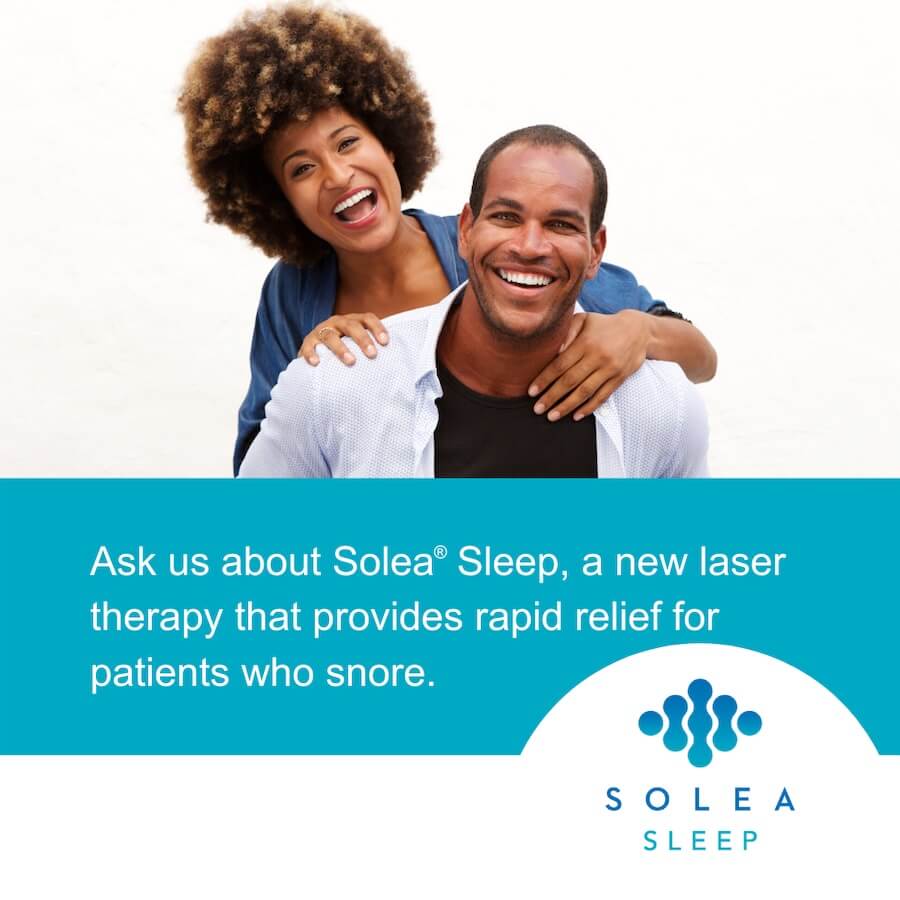
Solea is an advanced new dental laser technology that helps take the drill, needle, noise, and pain out of dentistry. Solea can accommodate patients of all ages and procedures of all kinds— in many cases without the need for anesthetic. Solea provides your entire family with a quick, comfortable, stress-free dental experience.

How does it work?
Solea uses laser technology to vaporize the target tissue like the tooth or gums, enabling us to perform fillings and pain procedures quickly and safely.
Is the procedure really done without a needle? How?
Yes, it is. The Solea laser uses a wavelength of light delivered in thousands of pulses per second, which can prevent pain signals from ever reaching your brain. The result is that dental work to be completed without needles, numbness, or pain. Most patients don't feel anything, while others feel a mild cold sensation or slight pressure.
As a result of reliably anesthesia-free procedures, you will be able to leave the office—without that uncomfortable numb sensation—almost immediately after I complete the procedure.
What types of procedures can you perform with Solea?
We use it for the majority of procedures, routine cavity fillings, removing old fillings, crowns and more complex surgeries.
What are the patient benefits of Solea?
- Most notably, it delivers an entirely new experience for our patients. Imagine a dentist visit with no needles, no numbness, no noisy drill, and no pain.
- Even the most fearful patients leave feeling relaxed and comfortable.
- In addition to the experience being so much better, visits are shorter because patients don't have to sit in the chair waiting to get over the local anesthetic. Fewer local anesthetics mean less time in the chair waiting to get the numbness away.
- Because we can work without anesthesia, we can now work in a faster appointment, which means less recovery time from that fat lip feeling when compared to traditional appointment types.
- Less time needed from school for kids and no risk of tissue injury during the anesthetic effective time.
- These are only some of Solea's greatest benefits: eliminating the dread from dental visits.
A Zero-Anxiety Experience
Solea is an advanced dental laser technology that helps take the drill, needle, noise, and pain out of dental visits. Solea can accommodate patients of all ages and procedures of all kinds— in many cases without the need for anesthetic.
Solea's unique laser wavelength enables fast, precise, and gentle cutting of teeth and gums. Dental procedures, from simple cavities to complex surgeries, can be completed pain-free and blood-free.
- Gentle and reliably pain-free treatments
- Fast and single appointment procedures which means less life disruption: you can take care of that treatment over your lunch break and still have time to eat after
- Effective soft tissue procedures
- Rapid and predictable healing
- Minimal post-operative discomfort
- Reduced need for sedation
Solea is our way of keeping you happy. Because more than anything, we love to see you smile.
Can Solea be used on kids / children?
Solea is great for kids! It's fast, comfortable, and reliably needle-free. In fact, your child can go right back to school and get right on with their daily activities because they won't be numb.
How many dentists are using the technology?
Thousands of general dentists and specialists use Solea across the US and Canada.
Is Solea more expensive?
We charge the same for Solea procedures and insurance coverage is the same for Solea procedures too.